
Ohio County Arrest Records
Arrest records and court charge records are related, but they are not the same record. The arrest side is tied to law enforcement and custody. In Ohio County, the Sheriff's Office is led by Sheriff Tom Baxter at 123 S. Mulberry Street, Rising Sun, phone (812) 438-3636. The sheriff or jail contact may help with current custody questions, while INjail, IDOC, and VINE can help with custody or notification channels when applicable.
The court charge record begins when the prosecutor files formal allegations in court. The Dearborn and Ohio County Prosecutor, Lynn Deddens, serves both counties from 165 Mary Street, Lawrenceburg, IN 47025, phone (812) 537-8884. Official sources state that the prosecutor reviews police reports and evidence and brings allegations of Indiana law violations to court through official charges. Once charges are filed, the charge details appear in the criminal case record maintained through Ohio Circuit Court and the Clerk of the Circuit Court.
The Dearborn and Ohio County Prosecutor homepage is the source for the two-county prosecutor structure serving Ohio County.
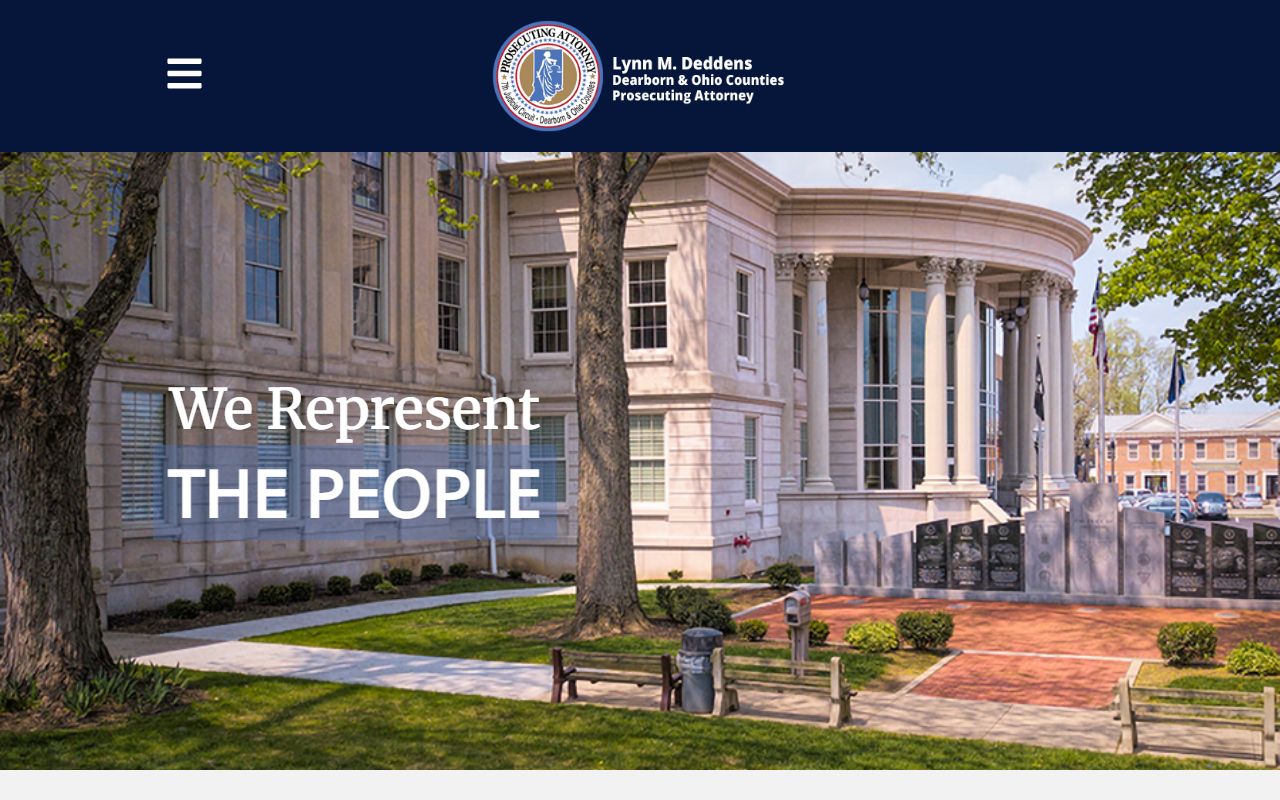
This local prosecutor role explains why many Ohio County charge questions point to a Lawrenceburg prosecutor office even though the court file is in Rising Sun.
Find Ohio County Arrest Records and Charges
For charges after arrest, start with Indiana MyCase. Search by defendant name, case number, citation number, or cross reference number. The charge section can show offense description, statute, offense degree, offense modification, original offense degree, citation number, and offense date. The chronological case summary shows how the charge moved through the case.
- Use the Sheriff's Office, INjail, IDOC, or VINE for custody and booking-status questions.
- Use MyCase for the court charge record after a case is filed.
- Open the matching Ohio Circuit Court case and review the charge list.
- Check each charge's statute, degree, original degree, offense date, and current case events.
- Ask the Ohio County Clerk at (812) 438-2610 for certified copies or public documents not linked online.
Ohio County does not publish a separate official mugshot or booking database in the researched county sources. A current jail lookup belongs with inmate records, not the court charge record. The full criminal case file, including plea, disposition, sentence, and probation events, belongs with criminal court records.
Charging Documents After Arrest
Charges after arrest are filed through a charging document. Indiana research for Ohio County confirmed the prosecutor's role in reviewing police reports and evidence before charges are brought to court. The specific document name can vary by case posture and law. The practical reader task is to connect the arrest or citation to the case number, then read the formal charge rows and docket events.
| Document Type | Who Uses It | What It Starts or Shows |
|---|---|---|
| Complaint | Often initiated from law-enforcement allegations or prosecutor review. | States alleged facts or offense basis and can start a criminal case. |
| Information | Filed by the prosecutor. | Sets out formal charges, statutes, counts, and offense levels without a grand-jury indictment. |
| Indictment | Returned through grand-jury process when used. | Lists charges approved through that process and moves the case into court. |
The official Dearborn County prosecutor department page states the prosecutor represents Indiana in felony and misdemeanor cases in Dearborn and Ohio Counties.
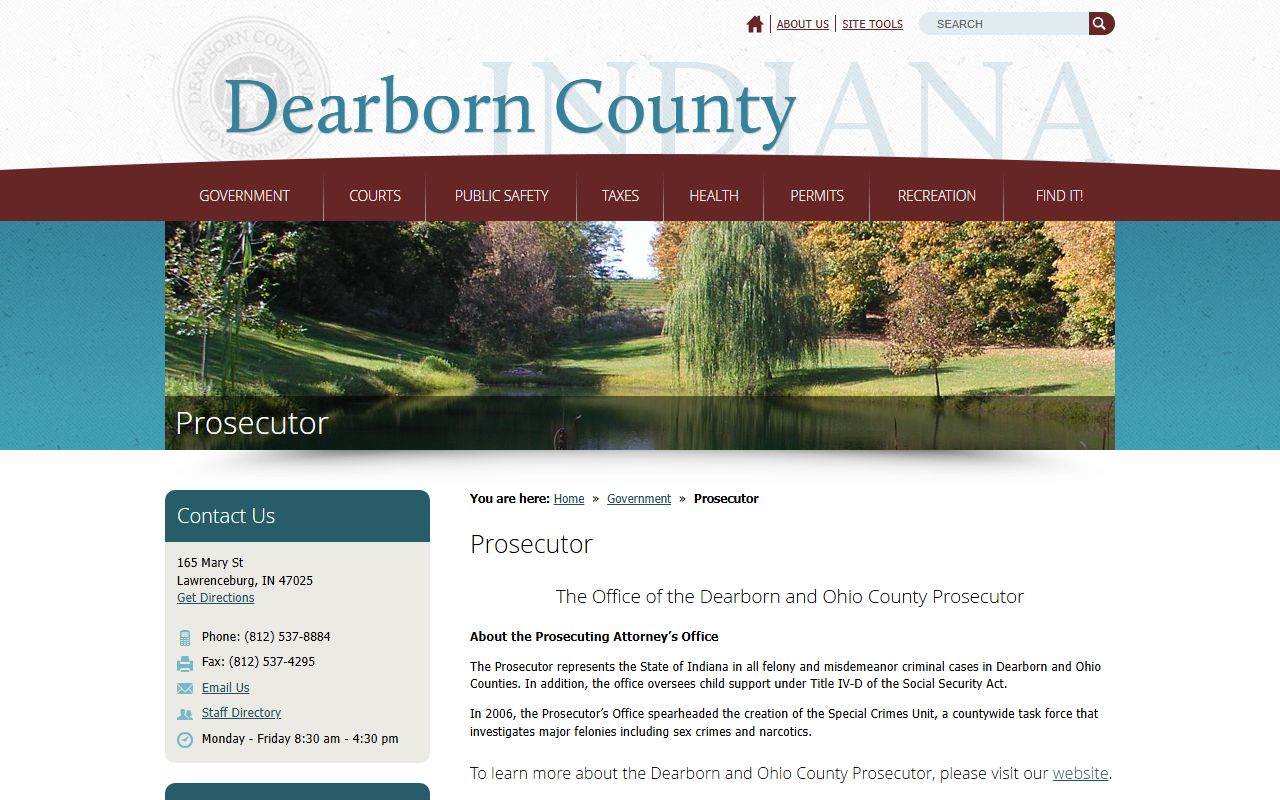
That official county source supports the local explanation that Ohio County charge records are tied to a two-county prosecutor office.
Ohio County Charge Status
Charge status can change as the case moves. One arrest can produce several charges. Some may remain pending while others are amended, reduced, dismissed, or resolved by plea or trial. The charge row is only one part of the record. Read it with the chronological case summary, disposition, sentence, and any order or judgment linked in MyCase.
| Status | What It Means | Where to Confirm |
|---|---|---|
| Pending | The charge is still active and has not reached final disposition. | Case status, hearing events, and court orders. |
| Amended | The filed charge was changed, often to reflect a different statute, count, or degree. | Charge modification fields and docket entries. |
| Reduced | The charge moved to a lower offense level or lesser offense. | Original offense degree, current degree, plea, and judgment. |
| Dismissed | The court or prosecutor ended that charge without a conviction on that count. | Disposition line, order, or judgment entry. |
| Nolle Prosequi | A prosecutor's decision not to proceed with a charge where that term is used. | Prosecutor filing and court docket entry. |
| Convicted | A guilty plea, verdict, or finding established guilt on that charge. | Disposition, judgment, sentence, and financial entries. |
Charges vs Convictions
A charge is an allegation. A conviction is an outcome. This distinction is critical for Ohio County arrest records and charges after arrest because an arrest can lead to no charge, one charge, multiple charges, a later amendment, dismissal, acquittal, plea, or conviction. A charge list should never be read as a conviction list without the disposition.
| Point | Charge | Conviction |
|---|---|---|
| Stage | Filed after prosecutor review or citation filing. | Entered after plea, verdict, or finding of guilt. |
| Proof Level | Formal allegation based on the charging process. | Guilt established under the criminal standard. |
| Can Disappear from Public View | May be sealed, expunged, dismissed, or restricted if eligible. | May be expunged or restricted only if statutory requirements are met. |
| Best Field to Read | Charge description, statute, degree, offense date, modification. | Disposition, judgment, sentence, and final order. |
Bond and Initial Hearings
Local rules for Dearborn and Ohio Counties include bond and initial-hearing details that matter after an arrest. Some categories must be held pending initial hearing, including murder or treason, Level 1 through 5 felonies, probation violations, people already on community supervision, people with other pending criminal charges or pretrial release, fugitives, and listed serious offenses. Level 6 felony and misdemeanor bond schedule entries include cash-only amounts and extra surety for out-of-state residents in some categories.
Ohio Circuit Court initial hearings for people bonded out or summoned are Monday and Thursday at 1:30 p.m. Incarcerated individuals are Monday and Thursday at 2:00 p.m. Friday times are scheduled by the court. The local rules state that failure to appear results in bail revocation and issuance of an arrest warrant. A charge record may therefore connect to bond, warrant, and custody entries.
Sealed vs Expunged Charges
Indiana access rules limit public access to certain arrest, charge, and case records. MyCase says public cases are searchable only if they are not confidential, sealed, or expunged. Indiana Code 35-38-9-1 and related sections cover expungement of eligible arrest, charge, and conviction records. Arrest-only or dismissed and acquitted matters may be treated differently from convictions, and conviction expungement depends on offense level, waiting period, sentence completion, payment of fines and costs, no new convictions, and excluded offenses.
| Point | Sealed | Expunged |
|---|---|---|
| Public Access | Restricted by court order, rule, or law. | Restricted through Indiana's expungement statute after court action. |
| Search Result | May not appear or may hide documents. | May be removed from ordinary public searches or shown only in limited form. |
| Scope | Can apply to a document, filing, or case. | Can apply to eligible arrests, charges, or convictions. |
| How It Happens | By rule, statute, or court order. | By petition, service on required parties, and court ruling. |
Charge Codes and Severity
MyCase charge data can show the offense statute, offense degree, offense modification, original offense degree, offense date, and citation number. These fields explain what was alleged and whether the count changed. Felonies, misdemeanors, OWI offenses, probation violations, fugitive matters, and bond events all can appear in criminal case records. Traffic-related charges may also include citation numbers when the case begins from a ticket or UTT.
Use the case number and charge detail together. A person name alone is not enough to identify a charge with confidence. The same person may have more than one case, one case may contain multiple charges, and one charge may have a different original degree than its final disposition. If a charge status affects employment, licensing, housing, immigration, or legal rights, verify the record with the Ohio County Clerk or the court file.
Access to Charge Records
Indiana Code 5-14-3-1 and 5-14-3-3 support public inspection and copying of public records unless an exception applies. Court records are also governed by Indiana Rules on Access to Court Records. Rule 4 states the general access rule, while Rule 5 lists whole cases or individual records that can be excluded from public access. Juvenile matters, mental-health matters, adoption, sealed cases, expunged cases, protected-party identifiers, Social Security numbers, financial account numbers, and victim addresses may be withheld or redacted.
The Dearborn and Ohio County Prosecutor contact page gives the Lawrenceburg office address and phone for the prosecutor serving Ohio County.
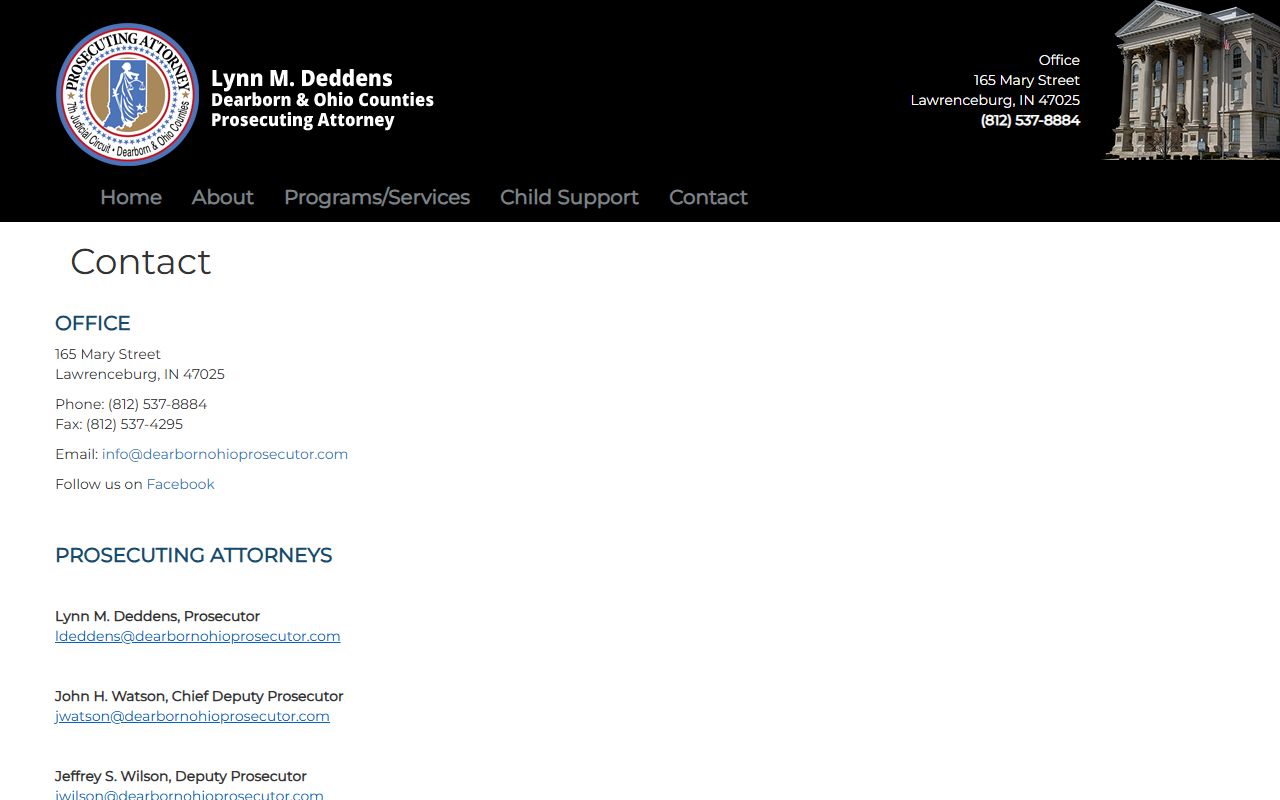
For filed court records, the prosecutor's office is not a substitute for the Ohio County Clerk, but it is the official office tied to felony and misdemeanor prosecution decisions.
Important: A public charge record is not an FCRA consumer report and should be verified with the originating court before official use.
Ohio County Charge Contacts
Use the office that matches the question. The Sheriff's Office handles local law-enforcement and custody questions. The prosecutor files and handles criminal charges for the State. The Clerk keeps the court record. The Circuit Court controls hearings, orders, warrants issued in the case, and case outcomes.
Ohio County Sheriff's Office
Sheriff Tom Baxter
123 S. Mulberry Street
Rising Sun, IN 47040
(812) 438-3636
Dearborn and Ohio County Prosecutor
Lynn Deddens, Prosecutor
165 Mary Street
Lawrenceburg, IN 47025
(812) 537-8884
Ohio County Clerk
Kristie Cate, Clerk of the Circuit Court
PO Box 185
413 Main Street, Room 207
Rising Sun, IN 47040
(812) 438-2610